

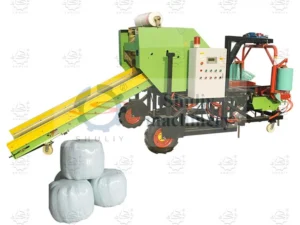

Model: 9YDB-70/Silage Baler Machine 70 type
Capacity: 55-75bales/h
Bale weight: 150-200kg/bale
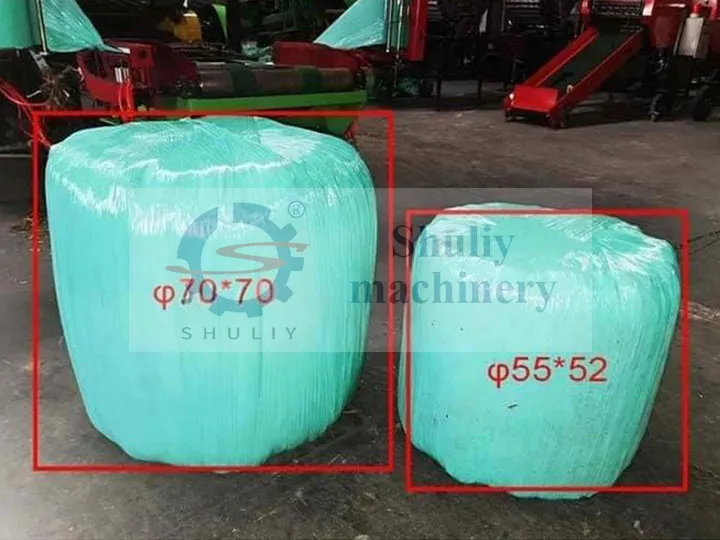
Bundle size: Φ70*70cm
Voltage: 380V,50HZ,3 phase
Total power: 15.67KW (total 5 motors)
Air compressor volume: 0.36m³
Feeding conveyor(WL): 700*2100mm
Film cutting: Automatic
Wrapping efficiency: 22s for 6-layer film
Size: 4500*1900*2000mm
Weight: 1100kg
Warranty: 1 year.
Advantage:Chinese factory, 30 year R&D experience,14 years of export experience,high cost performance, fast delivery.Leading technology.Quality assurance.Good reputation
Service: Free customized slution. Installation and debugging. Free training operation. lifelong online technical support. provide installation video,operation instruction. Welcome to visit our factory.
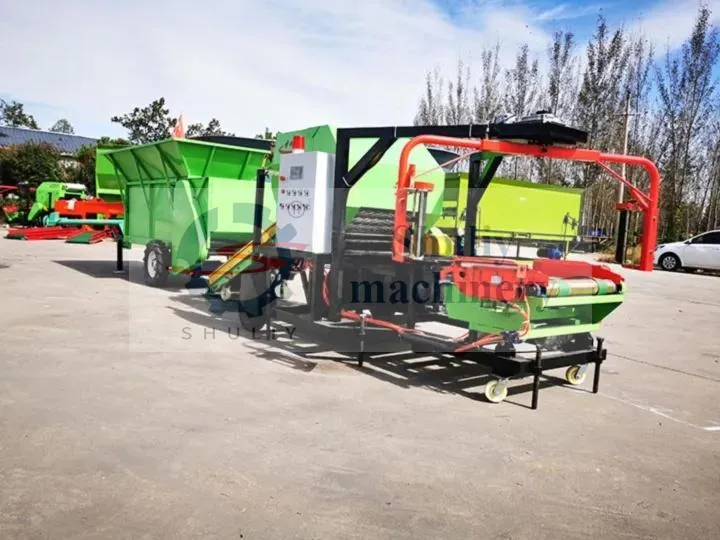
Silage baler machine is especially for bundling and wrapping feed into 70*70 round shape.With a capacity of 55–75 bales per hour, this machine offers high efficiency and reliability, making it a popular choice among modern farmers seeking to improve forage preservation and livestock feeding quality. It can bundle dry and fresh grasses, such as silage, corn stalks, reed leaf, Hay, Straw, etc. This machine is fully automatic opening the silo door and cutting the film. This machine functions to store feed for the animals. The feed stored can exist for a long time without nutrition loss. So, it plays an important role in animal husbandry.
Compared to the above two mini silage baler machines(9YDB-60/model 50(TZ-55-52 & 9YDB-55)), this type is a fully automatic silage baling and wrapping machine. It has the advantages of double film wrapping, high efficiency, and a motor power supply. Attention, this machine only uses the electric motor and is fully automatic during working. The baled silage has a high density, which is convenient for coating storage.
The hay baler machine offers an efficient solution for preserving forage intended for cattle and sheep. By tightly wrapping the forage in plastic film, it not only extends shelf life but also helps retain the feed’s nutritional quality over time.
Suitable Packaging Materials
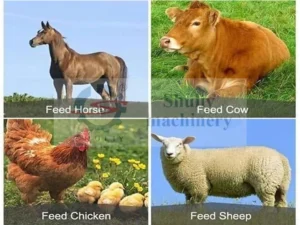
Materials are widely referred to as those that can be eaten by animals. Generally, you should plan to store the grass in advance. And the applicable animals are those who eat grass, such as horses, cows, sheep, etc.
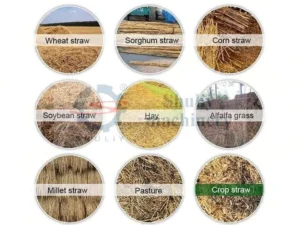
Hay: dried grasses or legumes, such as alfalfa, timothy, clover, or Bermuda grass, are commonly baled using hay balers.
Straw: stalks of cereal crops such as wheat, barley, oats, or rice, after the grain has been harvested, can be baled for use as bedding, mulch, or livestock feed.
Silage: fermented forage crops, such as corn, sorghum, or grasses, can also be baled using specialized balers equipped with wrapping mechanisms to preserve their freshness.
Working Progress of Silage Baling And Wrapping Machine
The working process follows the basic steps below:
- Raw Material Feeding
- Two types are available. One is manual feeding, and another one is machine feeding automatically. The raw materials are conveyed to the destination. When the materials are sufficient, it alarms. The conveyor belt will stop.
- Bundling
- The feed will be bundled in the specified location, and the rope or plastic net will bundle the feed into a round shape.
- Wrapping
- After bundling, use wrapping films to wrap the bundled feed to store for a long period.
Differences Between 50-type and 70-type Round Baler
Matched Equipment for Fully Automatic Silage Baler and Wrapper Machine
This round silage baler machine is a fully automatic baling and wrapping machine. In order to improve production efficiency, we can match the automatic feeder with the Model 70 silage baler machine to achieve automatic production.

Advantages of Silage Baler for Sale
Fast wrapping speed: two rolls of film work simultaneously, wrapping two layers in just 15 seconds and completing four layers in only 30 seconds (minimum wrapping requirement).
High wrapping capacity: two rolls of film can wrap 40–50 silage bales, each weighing approximately 200kg.
Total output: with 50 bales at 200kg each, the machine handles up to 10,000kg of silage in one film cycle.
Efficient usage: one roll of net wrap is ideally paired with four rolls of film for balanced operation.